

First VAT return after registration: A complete guide for beginners
Any business that has registered for VAT must file its first VAT return in the UK. It displays your purchases, sales, and the amount of VAT you can claim or owe HMRC. The procedure may appear complicated, but once you know what to expect, it's simple with digital filing and proper record-keeping.
Talk to our VAT experts
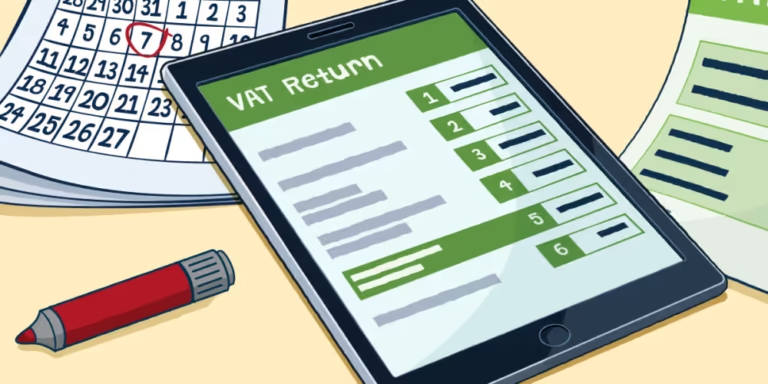
- Your first VAT return covers the period from your VAT registration date to your first quarter-end. You’ll be asked to report total sales, total purchases, VAT you charged customers, and VAT you paid on business expenses.
- For most UK businesses, this process is now completed online under Making Tax Digital (MTD) rules. You must use hmrc vat submission software to record and submit VAT data directly to HMRC.
When to file your first VAT return
- HMRC usually assigns your VAT return periods when you register. Most businesses submit returns every three months, but some file monthly or annually. You typically have just over a month after your VAT period ends to file and pay HMRC.
- In simple terms, your return and payment must reach them within 1 month and 7 days of the VAT quarter’s closing date.
- For example, if your VAT period ends on 30 June, your first VAT return must reach HMRC by 7 August, and the payment must be made by that date. Submitting or paying late may lead to penalties and interest.
- It is essential to use VAT accounting software that automatically tracks your due dates or to set reminders in advance.
Preparing for Your First VAT Return
Make sure your financial information is accurate and comprehensive before submitting. What you will need is as follows:
- VAT is charged on sales invoices.
- Get receipts and invoices for which VAT was paid.
- Bank statements for transaction cross-checking.
- Any import or export records.
You must separate standard-rated, reduced-rated, zero-rated, and VAT-exempt sales. Digital tools can simplify this by automatically categorising invoices.
The first VAT return often requires extra attention because it includes your opening stock, equipment purchases, and initial setup costs. Many start-up companies fail to claim VAT on pre-registration expenses that meet the criteria, which could lower your first VAT bill.
What you can claim on your first VAT return
- Goods purchased within four years before registration that are still used by your business.
- Services purchased within six months before registration (for example, professional fees or software subscriptions).
Common mistakes to avoid
- Inaccurate VAT rates: Your return may be distorted if you use the incorrect percentage (20%, 5%, or 0%).
- Missing invoices: All figures must be verified by accurate records.
- Combining personal and business expenses: VAT claims can be made only for expenses directly related to the business.
- Late submission: MTD has deadlines.
- Manual entry errors: Spreadsheets that are used without digital linking are not in compliance with MTD..
- Check your software: Ensure it’s MTD-compatible and linked to your HMRC account.
- Review all transactions: Confirm totals match your bank and sales records.
- Generate your VAT return: The software will calculate VAT due and VAT reclaimable.
- Submit digitally: Send the return directly to HMRC through the software.
- Pay VAT owed: Use HMRC’s online payment methods—Direct Debit, bank transfer, or debit card.
What happens after submitting
- HMRC reviews your submission and may take up to ten working days to confirm receipt. If your business is due a VAT refund, it’s usually processed within 10 working days of the return being submitted, though it can take longer in some cases.
- If you owe VAT, ensure payment is made to HMRC by the due date. Late payments can trigger surcharges or affect your compliance record.
If you miss your first VAT deadline
- Errors occur, particularly on your first return. If a VAT deadline is missed, submit and pay right away. For late submissions, HMRC applies a points-based penalty system, under which each missed return incurs additional penalty points.
- A fine may be imposed upon reaching your threshold, which is typically four points. You can appeal if there’s a genuine reason, such as illness or software failure, but prevention is always better than dealing with penalties later.
Can you change or correct a VAT return?
- If you find a mistake after sending your VAT return, you can usually fix it in your next one. This applies when the total value of the error is under £10,000, or, in some cases, up to £50,000, provided it meets HMRC’s adjustment rules. For larger discrepancies, HMRC requires a separate correction form.
- Always document the reason for the correction and keep supporting evidence in case HMRC requests a review.
When to seek help
- Even confident business owners find VAT confusing at first. If your records are complex or you trade internationally, professional advice can help prevent costly errors. MTD VAT return also simplify the process by syncing invoices, automating calculations, and maintaining compliance.
- Your first VAT return sets the foundation for all future submissions, so getting it right matters. A reliable VAT solution ensures accuracy, reduces stress, and helps you stay compliant from the start.
Frequently Asked Questions:
Your Questions – Answered ,We’re here to help you with anything VAT-related.
1. What information do I need before starting my first VAT return submission?
Before you start your first VAT return, collect all documents that show your business activity during the VAT period. This includes every sales invoice, supplier bill, and receipt showing VAT paid or charged. Keep records of any imports or exports too, as these can affect how VAT is calculated.
If you use accounting software, make sure all transactions are correctly entered and categorized. HMRC now requires VAT submissions through Making Tax Digital (MTD) software, so you’ll also need access to your Government Gateway login.
Having everything organized saves time and prevents mistakes. The first return can feel overwhelming, but if your paperwork, totals, and VAT records are in order, you’ll find the process much smoother and more accurate. It also helps ensure that any repayments or VAT reclaims are processed without unnecessary delays.
2. How do I file my first VAT return online with HMRC?
Filing your first VAT return online is now done through MTD-compatible software, not the old HMRC portal. First, connect your accounting software to your Government Gateway account. Most modern accounting tools guide you step-by-step through this process. Once connected, review your quarterly figures for total sales, purchases, VAT charged, and VAT paid.
The software will automatically calculate how much VAT you owe or can reclaim. After reviewing the summary, confirm the details and submit directly to HMRC. You’ll get a confirmation notice once it’s received.
Keep a digital copy of the return, as you must store VAT records for at least six years. If you expect a repayment, it’s usually processed within 10 working days. If you owe VAT, make sure payment reaches HMRC by the due date to avoid penalties.
3. What mistakes should I avoid in my first VAT return submission?
The first VAT return often brings simple but costly errors. The most common is mixing business and personal expenses or forgetting to claim eligible VAT on purchases. Make sure every figure is backed by a valid VAT invoice or receipt.
Another mistake is using the wrong VAT rate—standard, reduced, or zero-rated—on sales or purchases. Even small errors can raise HMRC flags or delay repayments. Missing submission deadlines is also a frequent issue; remember, returns and payments must reach HMRC just over a month after your VAT period ends.
Avoid manually entering figures unless your software is digitally linked, as MTD requires full digital record-keeping. Finally, double-check all data before submitting. Correcting errors later is possible but can be time-consuming and draw HMRC attention.
4. Can I reclaim VAT in my first VAT return submission?
Yes, you can reclaim VAT on most business purchases if they’re used for taxable activities. This includes goods and services bought after your registration and some made before you registered. HMRC allows VAT recovery on goods purchased up to four years earlier if they’re still in use, and on services within six months before registration.
For example, if you bought office furniture or paid for professional services during setup, you might reclaim VAT on those costs in your first return. Keep all original receipts or digital copies, and ensure the purchases were for business purposes only. Personal or entertainment expenses aren’t eligible.
If your reclaim amount is high, HMRC may review your claim before approving repayment. Maintaining accurate records and using approved software helps make this process smooth and reduces the chance of queries.
5. What happens after I submit my first VAT return?
Once you’ve submitted your VAT return through MTD software, HMRC will send an online confirmation. This means they’ve received your data successfully. If your return shows VAT payable, you must make payment by the due date to avoid penalties.
For repayments, HMRC typically processes them within 10 working days, though reviews may delay them slightly for first-time filers.
Keep digital records of your submission, payment confirmation, and invoices, as HMRC can request proof anytime within the next six years.
If you notice an error after submission, small adjustments (under £10,000 or within HMRC’s limit) can be corrected in your next return. Larger discrepancies require a correction notice. Your first VAT return is a learning stage—once you’ve gone through it once, future filings become far easier and faster, especially when your system is organized and MTD-compliant.