

MTD for Income Tax: What every business needs to know
Making Tax Digital for Income Tax is the next significant step in the UK's Tax reform. It changes how sole traders and landlords record and report their earnings. Starting in April 2026, digital record-keeping and quarterly submissions will become mandatory for thousands of small business owners.
Talk to our VAT experts
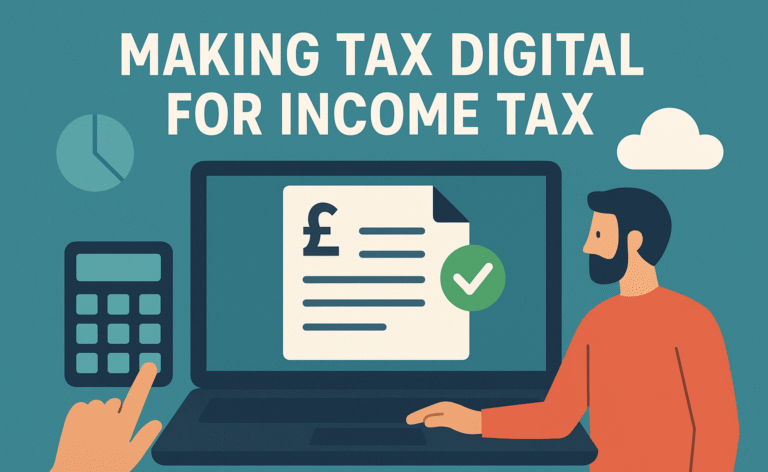
What MTD for Income Tax means
- MTD for Income Tax is part of HMRC‘s wider plan to digitalise the UK Tax system. It replaces manual or paper-based self-assessment reporting with a digital process. You’ll record income and expenses using approved software and submit updates every quarter.
- The goal is to reduce mistakes and provide a real-time picture of income and Tax owed. For businesses already filing VAT online, the process will feel familiar.
Who must follow the rules
- From April 2026, anyone earning over £50,000 from self-employment or property must join.
- From April 2027, the limit drops to £30,000.
- Those earning below that amount are exempt for now.
What businesses must do
To stay compliant, you must:
- Keep digital records of all business and property income.
- Use HMRC-recognised software to record and submit updates.
- Send quarterly updates summarising income and expenses.
- Submit an end-of-period statement annually to confirm the figures.
This replaces the traditional single Self Assessment return. Instead of one yearly task, you’ll now manage smaller updates throughout the year.
MTD for Income Tax deadlines
Staying aware of key dates helps you prevent late filing penalties.
- 6 April 2026: Required for those earning more than £50,000.
- 6 April 2027: Required for income over £30,000.
- HMRC can review thresholds after 2027.
Additionally, voluntary testing allows you to join early. Early adoption enables you to understand the process and identify issues before fines are imposed.
Penalties for late submission or payment
Under MTD, HMRC’s penalty system uses a point-based approach.
- Each missed submission adds one penalty point.
- When you reach the threshold (usually four points), you’ll be fined £200.
- If you continue to miss deadlines, additional fines apply.
- If a payment is not made within 30 days, a 2% to 3% interest charge may apply, along with a 10% annual fee.
These expenses can be avoided by keeping accurate records and sending in updates on schedule.
Impact on sole traders
- Sole traders will see a significant change in how they handle accounts. Every invoice, expense, and payment must be recorded digitally. The shift might seem time-consuming at first, but it offers clear benefits — real-time insight into earnings, easier tax forecasting, and fewer year-end surprises.
- Many small traders using spreadsheets today will need to upgrade to digital tools. Choosing compatible software early helps avoid last-minute issues.
Impact on landlords
- Landlords with one or more rental properties are also included. Each property’s income and expenses must be tracked digitally. Rent received, repairs, maintenance, and agent fees should all be entered into the approved software.
- Quarterly submissions mean HMRC can view property income throughout the year. This helps landlords manage Tax liabilities more accurately but adds new administrative steps.
Benefits of going digital
- Reduces the risk of calculation errors.
- Keeps you informed about the Tax due in real time.
- Simplifies communication with accountants or bookkeepers.
- Improves financial planning with up-to-date records.
- Prepares businesses for future HMRC digital systems.
How to prepare for MTD for Income Tax
Start preparation early to avoid disruption. Here’s a quick plan:
- Check your income: If your total self-employment or property income exceeds £50,000, start transitioning now.
- Choose compatible software: Make use of software that has a direct connection to HMRC. Final statements, quarterly updates, and digital records should all be supported.
- Review your record-keeping: Move away from paper or manual spreadsheets. Log every transaction digitally.
- Join voluntary testing: Signing up before the mandatory deadline lets you practice filing updates early.
- Train your staff or accountant: Ensure everyone handling finances understands MTD’s new process.
Risks of waiting too long
Delaying preparation can lead to real problems.
- Learning new software at the last minute increases stress.
- Missing early VAT return deadlines could trigger penalties.
- You may lose time reconciling older paper records.
- Accountants will charge more for urgent setups near deadlines.
Early action means fewer errors and smoother transitions when the rules start.
Software and digital tools
- Businesses must use HMRC VAT submission software that supports MTD for Income Tax. These tools automatically record, calculate, and send your quarterly updates.
- Some providers offer free or low-cost versions for landlords and sole traders with simple needs. Compare features carefully before choosing. Look for accuracy, automation, and easy HMRC connectivity rather than just price.
MTD and VAT users
- If you already follow Making Tax Digital for VAT, the process will feel similar. The main difference is the type of data sent — VAT focuses on sales and purchases, while MTD for Income Tax covers total business income.
- Businesses using VAT digital tools may already meet many MTD requirements. You’ll need to extend the same system to include income tax records.
Checklist for readiness
- Confirm your income threshold
- Choose MTD VAT bridging software
- Start digital record-keeping
- Sign up for voluntary testing
- Submit quarterly updates once ready
Completing these steps well before April 2026 keeps your business compliant and confident.
Final Thoughts
- MTD for Income Tax is not just another tax change. It’s a shift toward a more transparent, digital Tax environment in the UK.
- Sole traders and landlords who act early will have fewer issues later. Transitioning now means you’ll understand your figures better, plan more effectively, and avoid penalties when rules take effect.
- Using the right software and maintaining accurate records will help you stay compliant while saving time and effort in the long run.
Frequently Asked Questions:
Your Questions – Answered ,We’re here to help you with anything VAT-related.
1. What is MTD for Income Tax and who needs to comply?
MTD for Income Tax, or Making Tax Digital for Income Tax Self Assessment (MTD ITSA), is a significant step in the UK government’s plan to digitalise the Tax system. It applies to self-employed individuals and landlords earning above a certain threshold.
From April 2026, anyone with income over £50,000 from self-employment or property must follow MTD rules, and from April 2027, the limit lowers to £30,000. This system replaces annual self-assessment with quarterly digital updates using HMRC-recognised software. The goal is to reduce calculation errors and improve reporting accuracy.
Instead of a single yearly return, you’ll submit income summaries every three months, followed by a final statement at the end of the year. Preparing early by adopting digital record-keeping helps small businesses and landlords stay compliant and avoid penalties when MTD becomes mandatory.
2. When does MTD for Income Tax come into effect?
The rollout of Making Tax Digital for Income Tax begins in April 2026. At that point, anyone earning over £50,000 in self-employed or property income must switch to digital Tax reporting. One year later, in April 2027, the requirement will expand to those earning over £30,000. HMRC plans to review smaller thresholds later, meaning additional groups may need to join after 2027.
If you fall below these limits, you are not required to join yet, but voluntary registration is available. Starting early gives you more time to adapt to the new system and avoid stress when deadlines arrive.
For many, especially sole traders and landlords, this shift will completely replace the traditional Self Assessment method. The best approach is to prepare now—choose compatible software, keep digital records, and test the submission process before it becomes compulsory.
3. How does MTD for Income Tax change the way I report taxes?
Under MTD for Income Tax, the process of submitting a yearly Self Assessment is replaced by quarterly digital updates and an annual final declaration. You’ll record income and expenses digitally throughout the year using HMRC-recognised software. These updates give HMRC a clearer picture of your earnings in real time, reducing errors and late payments.
Instead of submitting one yearly report, you’ll send quarterly updates summarising your income and expenses. At the end of the year, you will provide a final declaration that replaces the Self-Assessment return. This system is designed to provide HMRC with a more transparent and more frequent view of your Tax position, while reducing human error.
For taxpayers, it means staying on top of bookkeeping throughout the year rather than rushing to complete everything once annually. Although the process may seem more frequent, it distributes the workload and provides greater financial visibility. Businesses that adopt MTD for Income Tax early will find the transition smoother and more manageable.
4. What software do I need for MTD for Income Tax?
To comply with MTD for Income Tax, you must use HMRC-recognised accounting software that can record and send your financial data digitally. The software should support quarterly submissions, digital record-keeping, and annual declarations. Many accounting tools in the UK are already MTD-compatible, offering features like income tracking, expense categorisation, and direct HMRC submission links.
When choosing, look for reliability, automation, and simple reporting tools rather than just low prices. For small businesses and landlords, user-friendly options with built-in VAT and income tracking are ideal.
If you’re already using MTD software for VAT, you might only need an upgrade to include Income Tax features. The right software saves time, reduces mistakes, and keeps your records compliant. Testing early helps you get comfortable with digital filing before it becomes a legal requirement in 2026.
5. How should businesses prepare for MTD for Income Tax?
Businesses should start preparing now to avoid last-minute issues. First, check your income level to see if you fall within the new MTD thresholds. Next, choose MTD-compatible software and begin recording all transactions digitally—no more paper logs or spreadsheets. Third, consider joining HMRC’s voluntary testing programme before 2026 to practice submitting quarterly updates without penalties.
Also, train anyone involved in bookkeeping or accounting so they understand how digital submissions work. Review your record-keeping habits and ensure every sale, rent payment, or expense is logged promptly.
Early preparation helps avoid stress, penalties, and costly software errors later. Businesses already using digital systems for VAT will find the transition smoother. MTD isn’t just a rule change—it’s a move toward more accurate, transparent, and efficient Tax reporting that saves time in the long run.