

Postponed VAT accounting in the UK: How to file your import VAT return
Postponed VAT Accounting, also known as PVA, provides UK importers with a means to manage import VAT without paying it immediately upon arrival of the goods at the border. Instead of making an upfront payment to customs, the VAT amount is recorded on the next VAT return.
Talk to our VAT experts

Since the Brexit vote, this change has been essential for many businesses. EU imports are now subject to the same regulations as those for products from other countries. PVA assists firms with cash flow management, maintaining clean accounts, and complying with HMRC regulations. When done correctly, VAT becomes a paper exercise rather than a financial burden, relieving the stress of large payments at the point of entry.
What is Postponed VAT Accounting (PVA)
Core rules of PVA
- Only VAT-registered businesses in the UK can use it
- It applies to goods imported from outside the UK, including EU countries
- The VAT on imported goods is recorded in the VAT return for the period the items reach the business
- If the goods are used for business purposes, the same VAT can be reclaimed as input Tax
This setup helps regular importers by cutting immediate cash costs and keeping VAT records in one place.
How PVA works for import VAT
Recording VAT on imports
When using PVA, businesses do not hand over VAT at the border. Instead, the VAT figure is included in the VAT return. The exact amount is reclaimed as input Tax if the goods qualify for business use. This creates a neutral effect on cash flow; however, the reporting still matters for compliance purposes.
- Businesses must maintain import invoices and customs declarations to avoid errors
- Supporting records, such as shipping and freight paperwork
Example:
Suppose a company imports machinery valued at £10,000 with a 20% VAT rate.
- Without PVA the importer pays £2,000 at customs straight away
- With PVA, the £2,000 is entered on the VAT return. If the goods are used for the company’s trade, the £2,000 is reclaimed as input Tax on the same return
The benefit is clear The company avoids parting with £2,000 at import and keeps funds available for operations.
Benefits of postponed VAT accounting
- Cash flow flexibility: Businesses avoid tying up cash at customs and instead manage VAT through regular reporting and filing.
- Simpler bookkeeping: All VAT entries, including import VAT, are recorded in the same place on the return.
- Lower risk of mistakes: Consistently handling VAT reduces the likelihood of errors or late payments.
- Compliance advantage: Following HMRC’s scheme enables businesses to stay within the rules while benefiting from smoother reporting.
Step-by-step guide to filing VAT returns with PVA
Step 1: Prepare records
- Import invoices
- Customs documentation such as C79 if issued
- VAT registration details
Step 2: Complete the VAT return
- Declare import VAT in the appropriate box for the period in which the goods arrived
- Claim the same VAT as input tax if the imports are for business use
- Submit the return by HMRC deadlines
Step 3: Check for accuracy
Compare customs records with VAT return entries to ensure accuracy and completeness of the data. It’s essential to conduct thorough manual checks to ensure that HMRC receives the correct figures, even though optional VAT filing software can be helpful.
Common mistakes to avoid
- Leaving import VAT out of the return
- Reclaiming VAT on personal or non-business purchases
- Missing HMRC deadlines, which can lead to penalties and interest
These problems are preventable with organised records and regular checks against customs paperwork.
HMRC rules for postponed VAT accounting
To stay compliant, businesses must:
- Be VAT-registered in the UK
- Report import VAT in the VAT return covering the arrival date
- Keep VAT and import records for at least six years
- Claim input Tax only where the goods are used for the business
Failing to comply with these rules could result in VAT reclaims being refused or fines being imposed by HMRC.
Digital tools for managing PVA
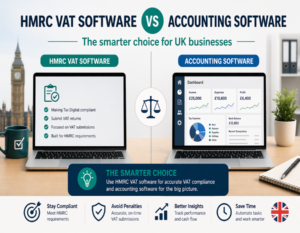
Companies that import regularly may find it helpful to use online VAT filing platforms. These tools can automate reporting, identify errors, and securely store records. Still, technology should support — not replace — proper record-keeping. HMRC can request evidence at any time, so the business remains responsible for accuracy.
Conclusion
Businesses in the UK can manage import VAT with Postponed VAT Accounting, which eliminates the need for upfront customs payments. It ensures easier compliance, frees up funds, and streamlines accounts. To get the most from PVA:
- Keep records of every import
- File VAT returns on time
- Reclaim VAT only on genuine business goods
Using your MTD login, you can directly manage your VAT. This makes it simple for you to check your records and file returns.
Frequently Asked Questions:
Your Questions – Answered ,We’re here to help you with anything VAT-related.
1. Who can use postponed VAT accounting in the UK?
Postponed VAT Accounting (PVA) is only available to businesses that are registered for VAT in the United Kingdom. Sole traders, partnerships, and limited companies that hold a valid VAT number can use this system when importing goods. It applies to items arriving from both EU and non-EU countries, provided the imports are for business purposes.
Personal purchases or goods not linked to taxable business activities do not qualify. To use PVA correctly, businesses must include import VAT on their VAT return for the period the goods arrive, then reclaim it as input tax if eligible.
Keeping proper records such as invoices, customs paperwork, and shipping details is essential for compliance. If a company is not VAT-registered, it cannot use PVA and will instead be required to pay VAT upfront at the border. Registration is therefore the first step to taking advantage of this scheme.
2. How does Postponed VAT Accounting improve cash flow for importers?
One of the main benefits of Postponed VAT Accounting is its positive impact on business cash flow. Normally, when goods enter the UK, import VAT has to be paid immediately at customs before the shipment can be released. For many businesses, especially small and medium-sized ones, this creates a significant strain because large sums of money are tied up at the border.
With PVA, the VAT due is instead declared on the company’s next VAT return. At the same time, if the goods qualify for business use, the same amount is reclaimed as input tax on the same return. This creates a balancing effect, meaning the business avoids making an upfront payment.
The funds that would have gone to HMRC at customs remain available to cover operating expenses, purchase additional stock, or pay suppliers. This flexibility makes PVA particularly useful for firms that import regularly.
3. What records are needed to file a VAT return with PVA?
Accurate record-keeping is essential when using Postponed VAT Accounting. A business must keep a clear audit trail to show how import VAT figures reported on the VAT return were calculated. The most important documents include supplier invoices showing the value of the goods, customs declarations confirming the arrival of the shipment, and import VAT statements, sometimes referred to as C79 certificates if issued.
Freight or shipping paperwork can also be useful as supporting evidence. These records should be organised by reporting period so they match the figures entered on the VAT return. Businesses are required to keep VAT and import documents for at least six years in case HMRC requests an inspection.
Digital copies are acceptable as long as they are clear and accessible. Failure to maintain proper records could result in penalties, rejected reclaims, or delays if HMRC raises questions about submitted returns.
4. Can PVA be used for all imported goods?
Postponed VAT Accounting can be used for most goods imported into the UK, but there are some conditions to be aware of. The scheme applies to items brought in from both EU and non-EU countries, provided the importing business is VAT-registered. Goods must be imported for taxable business use, not personal consumption or non-business purposes.
If a company tries to claim VAT on items unrelated to trade, the reclaim will be rejected, and HMRC may issue penalties. Some categories, such as excise goods like alcohol and tobacco, may have extra duties and rules alongside VAT, which businesses need to consider separately.
It is also important to record the import value accurately, including shipping, insurance, and duties, to ensure the VAT figure is correct. As long as the business follows these conditions, most everyday imports, from raw materials to machinery, can be accounted for under PVA.
5. What are common mistakes businesses make when using PVA?
Businesses sometimes make avoidable mistakes when handling Postponed VAT Accounting. A frequent issue is leaving import VAT out of the return, either due to poor record-keeping or misunderstanding how PVA works. Another mistake is reclaiming VAT on goods that are not strictly for business use, such as personal items or employee perks, which HMRC does not allow.
Missing filing deadlines is another risk, as late submissions can result in interest charges and penalties. Some businesses also forget to keep supporting paperwork, which is vital if HMRC requests evidence of imports. Relying solely on software without manual checks can create errors in reported figures.
To avoid these problems, companies should keep clear import records, cross-check customs data with their VAT returns, and only claim VAT that directly relates to their trade. Simple internal checks help ensure compliance and prevent unwanted challenges from HMRC.