

MTD VAT return for multiple entities: How to manage multi-business VAT filings
Managing VAT return across several businesses has become more difficult since MTD became mandatory. Every VAT-registered business needs clean digital records and a software-based link to HMRC. When someone handles filings for multiple entities, the risk of data mixing increases rapidly.
Talk to our VAT experts
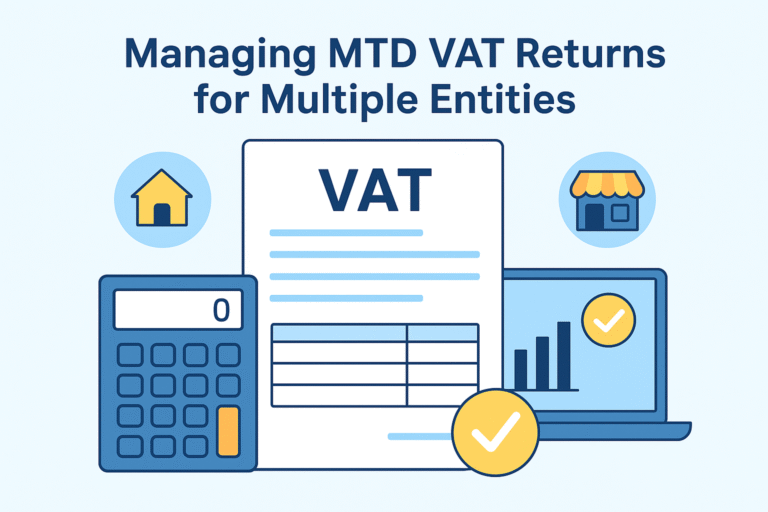
This guide explains how to manage various business VAT filings in a structured, straightforward way that ensures every return is correct. The goal is accuracy, fewer errors, and easier digital compliance.
Multiple businesses need separate MTD VAT return systems
MTD rules expect strict separation between entities because each business has its own VAT number, VAT period, and record trail. HMRC checks digital links to ensure the final numbers are linked to the original purchase and sales records.
When two businesses share files or mix entries, the audit trail is disrupted. HMRC systems then identify differences in dates, VAT codes, invoice numbers, or totals. This often results in follow-up questions or in the postponement of acceptance.
People who run several businesses typically use separate accounts, separate invoices, and separate bank activity. MTD expects the same separation inside the digital record system. Once that structure is set, filing becomes simple, even with many entities.
HMRC checks every return using automated rules. These checks are stronger under MTD and are similar for all types of businesses. The system reviews
- VAT code consistency
- Invoice date patterns
- Duplicated entries
- Missing records in the digital chain
- Periods that do not match the business profile
- Import VAT records
- Corrections that do not link to supporting data
These checks run instantly. When multiple businesses are handled together, errors often result from mixing import files, selecting the wrong period, or using a VAT number that belongs to another entity. Keeping profiles separate avoids most issues.
Setting up multi business digital records
Good structure makes MTD easier. Each business should have
- Its own digital folder
- Separate sales files
- Separate purchase files
- Unique naming formats
- Consistent VAT coding
- A clean import routine
Simple naming works well. Examples include Business A Sales Q3 or Rental SPV 2 Purchases April. Consistent naming avoids confusion when importing data into software. Mixed invoices are among the most significant sources of error in multi-business VAT returns. Digital separation removes that risk.
How software helps manage multiple VAT returns
People filing MTD VAT returns for several businesses often rely on software. The main benefit is the ability to switch between profiles without losing data. Software also maintains digital links so HMRC can trace figures back to the original records.
Valuable features for multi-business work include
- Multiple VAT number profiles
- Separate import areas
- Automated VAT code mapping
- Period reminders
- Summary review screens
- Error checks before filing
These reduce the number of manual steps. Even simple software can help if the structure stays clean.
Preparing records for each business
Each business needs digital records that show
- Invoice number
- Invoice date
- Supply type
- VAT rate
- VAT amount
- Customer or supplier name
The data must match the actual VAT period. Sales and purchase entries that fall outside the date range create problems because HMRC checks patterns between returns. If a business files VAT online quarterly and accidentally uploads five months of activity, the return will appear incorrect.
Keep a routine that checks
- Date ranges
- VAT codes
- Duplicated invoices
- Import VAT evidence
- Reverse charge entries
- Any adjustments
A routine reduces mistakes that usually occur when working fast or switching between profiles.
Preventing record mixing between businesses
Record mixing is the most significant risk when filing VAT for more than one business. It often happens due to
- Copying spreadsheets
- Switching tabs during imports
- Incorrect file names
- Shared folders for multiple entities
- Pasting totals instead of linking digital records
To stay safe, use a stable system. Store each business in its own folder. Import one company at a time. Review the VAT number and business name before preparing the summary. A five-second check saves hours of corrections.
Working with VAT codes across many entities
Each business may use different VAT treatments. Some common examples
- Retail uses the standard VAT rate
- Property SPVs use either an exempt or a standard, depending on the supply
- Digital sellers use a zero rate for overseas sales
- Importers use postponed VAT accounting
When handling many businesses, VAT code errors often occur because the person filing switches between business types. If the system applies the wrong VAT code, the final return becomes inaccurate. A brief review of VAT codes before preparing the summary helps avoid most errors.
Filing the MTD VAT return for each business
The filing process is simple once everything stays separate.
- Choose the correct business profile
- Confirm the VAT number
- Select the VAT period shown on HMRC
- Review the summary
- Check VAT codes
- Submit VAT return through the MTD link
If the record structure is clean, this step becomes quick. Mistakes only occur when the wrong profile remains active. If you deal with labour charges, read our detailed VAT on labour costs guide
Why digital VAT tools support better decision making
Accurate VAT data gives a clearer view of profit. When VAT entries are correct, the business can trust reports that show performance, spending and the cost of supplies. Digital VAT return software utilises error checks to facilitate more accurate forecasting and budgeting.
A business that avoids misposted entries gains a more realistic view of its expenses. When VAT patterns make sense, the company can plan growth with confidence.
Managing multiple business VAT deadlines
Managing several VAT deadlines can become complex. Some businesses file quarterly. Others file monthly. Some have different quarter endings like Jan to Mar or Feb to Apr. HMRC expects each return to be on time, even when one person handles ten or more businesses.
A simple reminder system works well
- Keep a small calendar list
- Group entities by quarter if possible
- Set alerts one week before deadlines
Late filings lead to points under the new penalty rules. These points apply to each business separately.
Conclusion
It becomes easier to file multiple business MTD VAT submissions when everything remains separate. Each business will require its own digital records, VAT number profile, and a straightforward, defined workflow. Mixing records causes most mistakes. A clean system for each business clears any confusion and helps to ensure accurate submissions.
Frequently Asked Questions:
Your Questions – Answered ,We’re here to help you with anything VAT-related.
1. How does MTD work when I manage more than one business?
MTD applies to each VAT-registered business you run. HMRC treats every business as a separate entity, even if you own all of them. Each one must keep its own digital records and file VAT returns using MTD-compatible software. You cannot combine sales or expenses from different businesses in a single return.
Every entity needs its own VAT number, its own digital accounting setup and its own MTD connection. Using one software is fine as long as it supports multiple profiles. You switch between businesses inside the system and file each return separately.
The main challenge is keeping records clean so that you never mix invoices or payments between entities. Once everything is organised, the filing routine becomes predictable. The key is to maintain consistent bookkeeping and update records often so you avoid errors at submission time.
2. Can one person file MTD VAT returns on behalf of several companies?
Yes. HMRC allows one individual to handle filings for multiple VAT-registered entities. You only need the correct permissions and a reliable software setup. Many business owners manage several companies on their own. Others appoint a bookkeeper or accountant and give them access through an agent services account.
Your responsibility is to make sure that each business has its own MTD connection. This means linking each VAT number with its own digital record system. After that, the filing process becomes routine. You log in, select the right entity and submit the correct return period.
Problems usually happen when records are mixed or when the person filing rushes without reviewing data. To keep the process smooth, update the bookkeeping for each company separately. Keep digital receipts, organise invoices in clear folders, and review figures monthly rather than waiting until deadlines.
3. What records must each business keep for MTD compliance?
Every entity must keep complete digital VAT records that show sales, purchases, VAT amounts, and any required adjustments. MTD requires digital links between each step of the record so you avoid manual copying or typing totals. This helps reduce errors and supports clean audit trails.
Each business must store customer invoices, supplier bills, payment logs and VAT calculations. Most software captures these automatically when you upload or enter transactions. If your business sells online or uses POS systems, connect them so the data flows directly. Bank feeds make things easier because you can match payments with invoices.
Avoid spreadsheets unless they have proper digital links and are used inside compatible software. HMRC expects records to be complete and up to date throughout the VAT period. When each business follows the same routine, managing multiple entities becomes easier and compliance becomes predictable.
4. How do I prevent mistakes when handling VAT returns for multiple businesses?
Mistakes often happen when owners switch between business records too quickly or forget which company they are updating. The best approach is to work with a fixed routine. Assign separate folders, email inbox labels and document storage for each business. Inside your software, name each entity clearly so you always know where you are working.
Reconciling monthly helps. You match your bank transactions with invoices and check for missing entries. If you maintain clean books, the VAT return becomes simple. Another helpful habit is using digital receipts so you never misplace documents.
When filing, pause before final submission. Check the VAT number, period dates and totals. Many errors occur when figures are uploaded to the wrong entity. As long as you keep systems organised, multi-business VAT work stays manageable.
5. Can I use one MTD compatible software for all my businesses?
Yes. Many digital VAT software tools support multiple business profiles under one login. This helps users who run several companies or manage client accounts. You create a separate profile for each business and securely link its VAT number. Using one platform keeps your workflow simple. You can switch between companies without setting up individual accounts.
Each profile stores its own returns, digital records and submission history. The key is to stay organised. Never mix invoices from different entities. Please make sure to keep naming rules, folders and bookkeeping routines consistent.
If you ever outgrow a single system, most tools make it easy to migrate to another platform because digital records are already well-structured. As long as you maintain clean books and follow HMRC requirements, managing several entities in one place works well.