

Free vs Paid VAT online software cost for UK SMEs
- No credit card required
Talk to our VAT experts
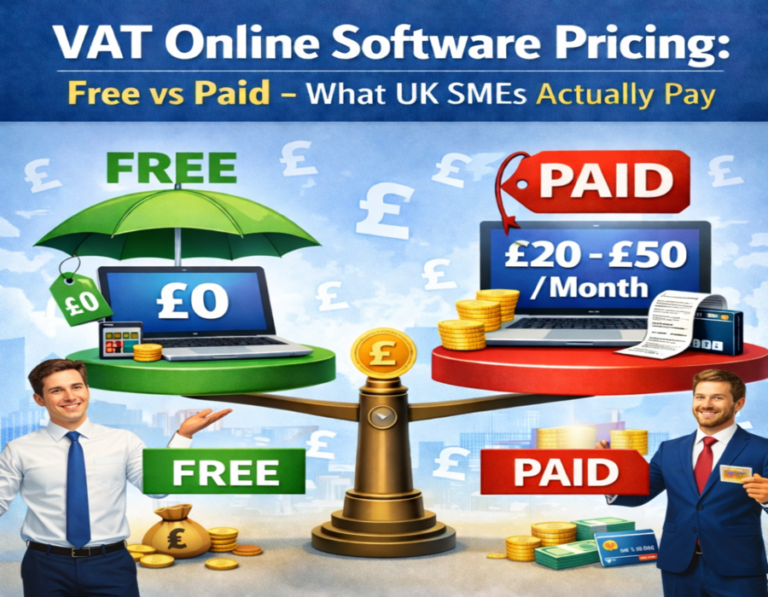
Why pricing matters for VAT online software in the UK
- VAT-registered businesses must use MTD-compatible software. It keeps digital records and submits returns directly to HMRC. Free options exist but suit simple setups. Paid software can handle more complicated tasks, such as automation and assistance.
- Many small and medium-sized businesses start with free or low-cost tools and transition to more advanced tools as they expand. The average monthly cost is between £0 and £35+, depending on the features.
Free VAT online software options for UK SMEs
Several tools offer free access for basic VAT filing. These are suitable for sole traders or small limited companies with simple returns.
- Some bridging software allows you to get data from spreadsheets or CSV files and send it to HMRC for free.
- Certain suppliers can provide you with free plans if your yearly income is below a certain amount, like £35,000.
- With many providers, bank-tied choices are free for accounts that meet certain requirements.
- HMRC’s list of recognised tools includes basic record-keeping and direct submission solutions, free for basic users.
Free tools provide the basic needs of MTD. You type in your sales and purchases. VAT is calculated by software. It submits returns online. There are typically limits and no complex automation. Reporting stays simple. Help docs can be the only support. Growth can quickly take you past free tiers.
Paid VAT online software pricing tiers for SMEs
- Most SMEs pay for better features. Prices start low and scale up.
- Basic plans cost £5-£15 per month—suitable for small businesses with simple VAT. You get direct HMRC submission, basic automation, and standard reports.
- Prices for mid-tier alternatives range from £15 to £35 a month. They add error checks, enhanced reporting, multi-user access, and integrations. Good for teams that are growing or for people who sell things online.
- Plans that are higher cost between £30 and £100. These include payroll linkages, enhanced analytics, and priority assistance. These are chosen by bigger SMEs or those with complicated VAT plans.
- Many companies offer discounts if you pay for the first month or for a full year. In most cases, prices are clear, and there are no hidden fees.
Free vs paid VAT software – Direct comparison
- Free software handles basic MTD VAT returns. It works if your business has low transaction volume and no need for extras.
- Paid versions add value in key areas. Automation cuts down on data entry time by hours. Tracking VAT in real time reduces mistakes. Direct integrations instantly pull in bank feeds. Professional help is useful when there are deadlines or audits.
- With scalability, you can add users or features without switching tools. For many small and medium-sized businesses, paid software pays for itself.
- It reduces the risk of fines for mistakes. Spending less time filing means more time to focus on sales. Free tools are good for new businesses that want to try things out. Paid ones are better for organisations that need stability.
What UK SMEs actually pay in practice
- Real-world costs depend on business type. Sole traders with simple returns often stay under £10 monthly or use free options. Solid MTD tools for small limited companies cost between £15 and £30 on average. People who have more than one VAT scheme or a lot of them pay £25 or more.
- Entry-level prices range from £10 to £25 in popular settings. Growing businesses are worth between £30 and £100. Free remains an option for small businesses as long as they stay within revenue limits. For more on choosing MTD software, see our guide here.
How to choose between free and paid VAT online software
- First, look at how complicated your VAT is. Easy quarterly returns? Free could work. A lot of transactions or a lot of schemes? Safety of paid advertisements.
- Check the HMRC-recognised list to see if it works with your system. Try out free trials if you can. Think about how much time it will cost. Doing things by hand with free tools might add up.
- Think about growth. If you are eligible, you can start for free. As demands grow, switch to paid. Check the rules to see if there are any limits on contributions or users.
- When it comes to VAT online software prices, UK SMEs have clear options. Free takes care of the fundamentals for many. Most people find that paying for things makes them more efficient and gives them peace of mind.
Disclaimer: Our blogs and articles are written to share general information only. If you’re looking for an easy way to submit your VAT under Making Tax Digital (MTD), SwiftVATPro offers a simple and reliable online solution.
Frequently Asked Questions:
Your Questions – Answered ,We’re here to help you with anything VAT-related.
1. Is there really completely free VAT online software that works for MTD in the UK?
Yes, there are a few ways to file your basic MTD VAT. You can send CSV or spreadsheet data directly to HMRC for free using bridging software. Some businesses let you use their services for free if your annual turnover stays between £35,000 and £50,000.
Bank-linked ones (such as those connected to qualifying accounts from certain providers) become free with little activity, such as one transaction per month. HMRC’s list of approved products includes basic record-keeping tools that are free for simple users. These include entering sales and purchases, calculating VAT, and submitting forms online.
But expect limits: no automatic bank feeds, only basic reports, and support mostly through help files. They suit sole traders or very small operations with low transaction volumes. Once volume grows, many switch to paid automation and fewer headaches.
2. What do most UK SMEs actually end up paying monthly for VAT online software?
The real numbers fall within defined ranges, but it depends on how things are set up. Sole entrepreneurs who only have to file simple quarterly returns frequently pay less than £10 or choose the free option. Small limited businesses usually pay between £15 and £30 for good MTD tools that work well.
Businesses that deal with more than one VAT scheme, make e-commerce sales, or handle higher volumes pay £25 to £50 or more. Paid plans for beginners start at £5-£15; plans for the middle tier cost £15-£35 (including integrations and error checks); and plans for the top tier cost £30 or more. In fact, many small and medium-sized businesses choose the £10–£30 range after trying the free option.
It’s enough for automation without being too much. Annual billing or first-month deals can drop effective costs. Free works if you qualify and stay small, but paid often feels worth it for the time saved and lower penalty risks from mistakes.
3. When should a small business switch from free to paid VAT software?
When free limits start to get in the way of your work, switch. Paid makes sense if you have to enter data by hand every 3 months, handle more transactions, or use bank feeds to avoid copy-paste mistakes. Free tools work effectively for simple tasks for solitary merchants or new businesses with minimal sales.
Many small and medium-sized businesses (SMEs) start out free to test, then move up as their sales grow, usually around the £30,000-£50,000 mark. Paid generally pays for itself by letting you file faster and giving you peace of mind during audits or deadlines. First, look at HMRC’s list and trial possibilities.
The right VAT software automatically performs these calculations, tracks direct and shared costs, and makes yearly updates so you don’t have to redo the numbers. Landlords with mixed buildings will save a lot of time.
4. Do paid VAT online software plans really save time and avoid penalties compared to free ones?
Yes, most established small and medium-sized businesses do. Free choices can handle basic MTD submissions, but they require manual input, which takes time and can lead to mistakes, especially as transaction volume increases. Paid plans (£5–£35+) automate bank feeds, let you know about mistakes before you send them, and let you track VAT in real time.
This reduces the time required to file and the risk of fines (HMRC fines start at £100+ for late or incorrect filings). When things get hectic or you have questions, professional assistance can help. And scalability enables you add users without having to switch.
Many people say that paid software pays for itself quickly because it saves time and more time to focus on sales instead of admin. Free works well for small installations, but if your business expands or becomes more complex, paying is more reliable.
5. How do I pick the right VAT online software pricing tier for my SME?
Check how complicated your VAT is first. Quarterly returns that are easy to fill out and have few transactions? A free tool or a simple plan that costs £5 to £15 might work. Do you need frequent sales, integrations, or team involvement? For automation and reports, go with the middle tier, which costs £15-£35.
Do you have many schemes, or is the work extensive? Think about paying £30 or more for extra features and faster service. Always look at HMRC’s list of approved MTD-compatible software. Try out free trials to discover how well they fit and how easy it is to enter bank data or check for errors.
Think about the real costs: free tools that need a lot of manual work add up quickly. Plan for growth as well. Start small or for free if you can, and then increase later without any problems. Check for clear prices, no extra charges, and discounts for paying in full. Choose what best fits your current demands, don’t spend too much, and make sure compliance is easy to achieve.