 Skip to content

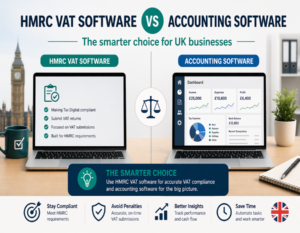
HMRC MTD VAT software vs. basic online VAT submission tools
Businesses comparing HMRC MTD VAT software vs basic VAT tools are usually trying to avoid one thing. Problems after submission. Late corrections. HMRC queries. Penalties that arrive months later.
- No credit card required
Talk to our
VAT experts

On the surface, many online VAT tools look similar. They all submit VAT returns digitally. But how they handle data, checks, and compliance is very different.
This article explains those differences clearly, without technical noise.
What basic VAT submission tools are designed for
Basic VAT tools exist to complete a single task. Sending VAT figures to HMRC through a digital connection.
These tools usually rely on figures prepared elsewhere. Often spreadsheets or manual calculations are used. The tool does not question the data. It simply transmits it.
For very simple VAT returns, this can work. Typical use cases include
- Single business
- Low transaction volume
- No adjustments
- Standard VAT scheme
Outside this setup, risk increases quickly.
Limitations of basic online VAT tools
Basic VAT tools do not thoroughly validate your VAT data.
They usually do not
- Check unusual changes between periods
- Detect missing box values
- Flag incorrect totals
- Warn about inconsistent VAT positions
If figures are wrong, the return is still submitted. HMRC accepts it first and questions it later. This shifts risk entirely onto the business or agent.
What HMRC MTD VAT software is built to handle?
- Structured data handling
- Validation before submission
- Digital record continuity
- Clear submission history
HMRC MTD VAT software vs basic VAT tools for error control
This is the most important difference. Basic tools trust user input.
- MTD VAT software checks it
- MTD software highlights problems early
- Large swings in figures
- Missing adjustments
- Unusual repayment claims
These checks reduce the risk of answering follow-up questions or facing penalty points.
For businesses that file quarterly, prevention is more important than speed.
Data handling and audit readiness
- Under Making Tax Digital, businesses must maintain digital records linked to VAT submissions.
- Basic tools often require manual steps that break the flow of digital work.
- MTD VAT software tracks submissions and their records.
- This matters if HMRC later asks how the numbers were calculated or requests supporting evidence.
- Rebuilding records after submission takes time and creates stress.
HMRC MTD VAT software vs basic VAT tools for accountants
- Multiple clients
- More than one VAT number
- Agent access
- Tracking submissions
Time savings beyond submission day
Basic VAT tools appear faster because they do less. But time is often lost later through
- Correcting mistakes
- Responding to HMRC messages
- Reworking rejected returns
- Explaining discrepancies
MTD VAT software shifts work earlier in the process when mistakes are easier to fix. This means fewer surprises after submission.
Cost comparison without surface pricing
Basic VAT tools are often less expensive at first. But the real cost includes
- Risk of fines
- Time spent fixing mistakes
- Additional accountant involvement
- Disruption during HMRC checks
MTD VAT software may cost more upfront, but it reduces risk over time.
For many businesses, stability matters more than low fees.
Which option suits different business types?
Basic VAT tools may suit:
- Very small businesses
- Simple VAT activity
- Few transactions
- No adjustments
HMRC MTD VAT software suits:
- Growing businesses
- Ecommerce sellers
- Businesses with adjustments
- Accountants and agents
- Anyone prioritising accuracy
A neutral view on software choice
- Some businesses start with simple tools and switch to MTD VAT software as complexity increases
- Others choose MTD software early to reduce risk from the start
- The best choice depends on transaction volume, internal expertise, and compliance tolerance
- Many platforms are used by businesses that prefer not to rely only on spreadsheets for filing and recordkeeping
Final comparison takeaway
- HMRC MTD VAT software vs basic VAT tools are not about feature lists.
- It is about how much responsibility you want to carry after clicking submit.
- Basic tools submit data.
- MTD VAT software helps protect it before submission.
Disclaimer: Our blogs and articles are written to share general information only. If you’re looking for an easy way to submit your VAT under Making Tax Digital (MTD), SwiftVATPro offers a simple and reliable online solution.
Frequently Asked Questions:
Your Questions – Answered ,We’re here to help you with anything VAT-related.
1. What is the real difference between HMRC MTD VAT software and basic VAT tools?
The main difference is the level of protection you receive before submitting your VAT return. Basic VAT tools send the numbers you enter to HMRC. They assume your calculations are correct. If something is wrong, the issue usually appears later through a query or penalty notice.
HMRC MTD VAT software works differently. It focuses on validation before submission. It checks totals, highlights mistakes, and links digital records correctly. That makes it less likely that mistakes will go unnoticed.
If your VAT situation is simple and doesn’t change often, a basic tool might be all you need. But if your business changes, needs to repay money, or does more business, the right MTD VAT software gives you more control and reduces the risk of non-compliance over time.
2. Can I use a basic VAT submission tool and still stay compliant with Making Tax Digital?
Yes, but only if the tool meets digital submission requirements and you maintain separate digital records. Compliance is not just about submitting through an API. It also requires keeping digital records and maintaining digital links between your data and the VAT return.
Basic tools often rely on manual spreadsheets. If you copy and paste figures without maintaining proper digital continuity, you may create compliance gaps. These gaps might not show immediately, but can become a problem during a review.
MTD VAT software usually manages records and submissions together, making compliance easier to maintain. So, while basic tools can work, they require more manual discipline and record-keeping responsibility from the user.
3. Is MTD VAT software worth the extra cost compared to simple VAT tools?
It all depends on how you figure out the cost. Basic VAT tools are usually cheaper at first. But they don’t do much checking or validation—the total cost increases if a mistake requires paying fines, making corrections, or hiring an accountant.
MTD VAT software often costs more per month, but it reduces manual checking, flags potential errors early, and keeps clearer submission records. For businesses that file quarterly, that added control can save time and reduce stress.
A simple tool might be all you need if your VAT numbers are easy to understand and don’t change very often. But if your business is growing and you’re dealing with imports, adjustments, or repayments, the extra structure that MTD software gives you is often worth the cost.
4. Which option is better for accountants managing multiple clients?
For accountants, scale matters. Basic VAT tools usually work one return at a time. They are not designed for managing multiple clients efficiently. Switching between VAT numbers and tracking submission history can become time-consuming.
MTD VAT software is typically built with multi-client access in mind. It enables the structured management of multiple businesses, clearer filing records, and better visibility across submission periods. This reduces manual follow-ups and improves workflow during busy quarters.
Basic tools may still work for an accountant who only has a few simple VAT clients. Structured MTD software becomes more useful as the portfolio grows, reducing the risk of missing deadlines or providing incorrect numbers.
5. When should a business move from basic VAT tools to MTD VAT software?
When a business is small, it often starts with basic tools. That’s how it is. Usually, the change happens when VAT gets harder to understand. Frequent changes, claims for repayment, imports, partial exemption calculations, or a rise in transaction volume are all signs that it might be time to switch.
Getting questions from HMRC about past submissions is another trigger. If you are spending more time double-checking spreadsheets before filing, that is often a signal that your system needs more structure.
Moving to MTD VAT software sooner can prevent issues rather than waiting to react to them later. It provides greater clarity, stronger validation, and better long-term compliance control as your business expands.