

What is a VAT number, and why do businesses need one
A VAT number is a unique identification number assigned by HMRC to businesses when they register for VAT in the UK. It confirms that your business can charge, collect, and recoup VAT on goods and services. This number is necessary to file VAT returns, trade with other VAT-registered companies, and remain compliant with Tax laws. It is typically found on VAT-related official documents such as invoices and receipts.
- No credit card required
Talk to our VAT experts

What does a VAT number mean?
- A VAT number is a special reference code assigned by HMRC to a business after it successfully registers for Value Added Tax in the UK. It typically follows the format GB123456789, though some branch traders may have 12-digit numbers (e.g., GB123456789001).
- This number acts as proof that HMRC recognises your business for VAT purposes. You must include it on all invoices, VAT returns, and contracts. If a VAT number is missing, those transactions may not qualify for VAT reclaim, causing compliance issues.
Who needs a VAT number?
Not every UK business is required to register for VAT — it depends on your annual taxable turnover.
- Compulsory registration: If your taxable turnover exceeds £90,000 in any 12 months, you must register for VAT.
- Voluntary VAT registration: Even below this threshold, you can register to reclaim VAT on purchases or enhance business credibility, especially for B2B trade.
- Non-UK businesses: Overseas companies selling goods or services in the UK may also be required to obtain a UK VAT registration number.
If you are required to register for VAT but do not do so, you may incur penalties from HMRC. You may also be required to pay VAT back to HMRC, depending on the extent of the error, and you will be charged interest on those amounts. To ensure compliance, it’s a good idea to monitor your turnover on a monthly or quarterly basis.
How to apply for a VAT number
- Confirm eligibility: Ensure that your turnover satisfies or will soon satisfy the VAT threshold.
- Apply online: Use HMRC’s online registration service.
- Provide information: Provide details regarding your identity and address, what you do, your turnover level and your bank details.
- Receive your certificate: HMRC will issue your VAT certificate when you have successfully registered.
Most applicants receive their VAT number within two weeks; however, HMRC may require additional checks, which can delay the process by up to a week.
Where to find your VAT number
After your UK VAT number has been allocated to you, it will show on many official documents, such as:
- Your VAT registration certificate, which gets sent in the post from HMRC, your VAT returns, and confirmations of online submissions.
- The invoices you send to customers.
- Your correspondence with HMRC and your online Tax account.
You should always clearly display your VAT number on your invoices, as your customers will use it to reclaim VAT. If you do not include it or provide incorrect details, it may cause disputes or rejected claims.
When you need to use a VAT number
- Issuing invoices: Must be included on every invoice you send.
- Submitting VAT Returns: Taxpayers must submit their VAT returns to HMRC online.
- Reclaiming input VAT: This is necessary if you want to claim back VAT on business expenses.
- Cross-border trade: It is used to verify VAT registration between suppliers and purchasers.
- E-commerce compliance: If you sell on sites such as Amazon or eBay, your VAT number verifies that your business is an honest seller and that you comply with their Tax compliance requirements.
How to check a VAT number
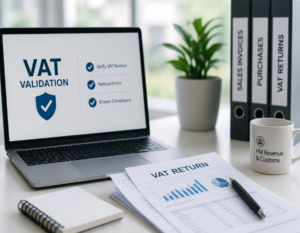
Verifying a VAT number can help reduce mistakes and fraud. always verify a supplier’s or customer’s contact information before completing a transaction to make sure it’s accurate and reliable.
- For UK VAT numbers, use the official GOV.UK VAT checker.
- For EU VAT numbers, use the VIES validation system from the European Commission.
Verification ensures the VAT number is valid and correctly linked to the business — protecting your claims and reducing audit risks.
What happens if you don't have a VAT number
If you operate your business without a VAT number when you are required to register, the consequences can be tough. I.e:
- Fines and penalties from HMRC
- VAT liability backdated
- Inability to reclaim VAT on expenses
- Loss of credibility in the eyes of clients and suppliers
- Increased likelihood of an HMRC audit
Even voluntary registration can benefit small businesses, as it improves credibility and enables VAT recovery on expenses.
VAT number vs. VAT return
A VAT number identifies your business for VAT purposes, while a VAT return reports the VAT you’ve collected and paid to HMRC. Without a valid VAT number, you cannot file VAT returns. Both are crucial for maintaining compliance under Making Tax Digital (MTD) rules.
Getting your VAT number is just the first step. Managing ongoing VAT submissions, compliance, and digital record-keeping simplifies everything.
With HMRC VAT submission software, you can:
- Submit VAT returns online with full MTD compliance
- Store VAT numbers and invoices securely
- Validate VAT numbers to prevent filing errors
- Generate HMRC-ready reports instantly
With automation and accuracy, it helps businesses stay compliant and confident with every VAT submission.
Conclusion
A VAT number is far more than just a registration code — it’s your business’s identity for Tax compliance and trading. You can stay in compliance and prevent fines by understanding what a VAT number is, who needs one, and how to check it. Early registration and the use of reliable digital VAT software ensure more seamless operations and complete peace of mind.
Disclaimer: Our blogs and articles are written to share general information only. If you’re looking for an easy way to submit your VAT under Making Tax Digital (MTD), SwiftVATPro offers a simple and reliable online solution.
Frequently Asked Questions:
Your Questions – Answered ,We’re here to help you with anything VAT-related.
1. What common mistakes should businesses avoid when using their VAT number?
One of the most frequent mistakes businesses make is using an incorrect or outdated VAT number on invoices or tax filings. Others forget to register for VAT when they cross the registration threshold or fail to update HMRC when company details change.
Some also apply UK VAT rules to EU transactions without understanding the post-Brexit changes. These errors can lead to penalties, rejected VAT claims, and unnecessary disputes with customers or suppliers.
To avoid such issues, always double-check your VAT number before issuing invoices, verify your clients’ VAT details, and keep all records properly organised. Train your accounting team on current VAT requirements and carry out periodic internal audits. This not only ensures compliance but also builds credibility and trust with trading partners and Tax authorities alike.
2. Can freelancers or small businesses benefit from voluntary VAT registration?
Yes, freelancers and small businesses can benefit from voluntarily registering for VAT, even if their income is below the threshold. Doing so allows them to reclaim VAT on business purchases such as equipment, software, or travel expenses, helping to reduce overall costs.
Voluntary registration can also make a business appear more credible and professional, especially when working with larger, VAT-registered clients.
However, it’s essential to consider the administrative side — once registered, you must file VAT returns regularly and maintain accurate digital records in line with Making Tax Digital (MTD) requirements.
For many small businesses, using cloud-based VAT software can simplify this process. Ultimately, voluntary registration can be a smart move for those aiming to grow their business, recover VAT costs, and improve their standing with clients and suppliers.
3. How do VAT numbers affect cross-border trade?
VAT numbers play a crucial role in cross-border trade, especially for businesses dealing within or outside the EU. They help verify that both the supplier and buyer are correctly registered for VAT, ensuring that the correct Tax rules are applied.
For example, if a UK company sells goods to an EU-based business, having valid VAT numbers on both sides helps determine whether VAT should be charged or zero-rated. After Brexit, UK traders must understand how to manage imports and exports under the new VAT arrangements.
Using an incorrect or missing VAT number can result in customs delays, rejected invoices, or fines from Tax authorities. Always validate VAT numbers using official tools, such as the VIES system for EU businesses or the relevant government website, specifically the UK checker for UK entities. Accurate VAT use ensures smooth trade operations, better compliance, and stronger international relationships.
4. What should businesses do if a VAT number is found to be invalid?
If you discover that your VAT number—or a supplier’s—is invalid, it’s important to act immediately. Start by confirming the details with HMRC or using the official GOV.UK VAT checker for UK businesses. For EU transactions, use the VIES database to verify the number again.
Sometimes, a VAT number may appear invalid temporarily due to recent registration changes or system delays. If it remains invalid, avoid issuing or accepting invoices that include it, as those transactions may not qualify for VAT recovery. Contact the business involved to confirm their correct registration details.
If the issue is with your own VAT number, reach out to HMRC to resolve it promptly. Keeping clear documentation of verification attempts protects your business during audits and ensures you remain compliant with Tax regulations.
5. How can businesses keep track of multiple VAT numbers effectively?
Businesses operating in multiple countries or through different branches often manage several VAT numbers. The best way to stay organised is to maintain a centralised digital record that lists each VAT number, the entity it belongs to, and the country of registration. Cloud-based VAT software can automate tracking, validation, and reporting for each VAT ID.
Set clear internal procedures so that invoices, returns, and compliance documents are always linked to the correct VAT number. Conduct regular reviews to ensure all registrations remain valid and up to date, especially after company changes or international expansion.
Some businesses also assign responsibility for VAT management to a dedicated finance team member or accountant. By staying organised and using automation tools, businesses can avoid confusion, prevent filing errors, and maintain consistent compliance across all tax jurisdictions.