 Skip to content

How to file VAT online during peak deadlines: Avoid HMRC system overload
Filing VAT online during peak deadlines is more challenging than during regular periods. HMRC systems handle heavy traffic in the days leading up to VAT deadlines. Many businesses file at the same time. This results in slow response times and unsuccessful submissions.
- No credit card required
Talk to our
VAT experts
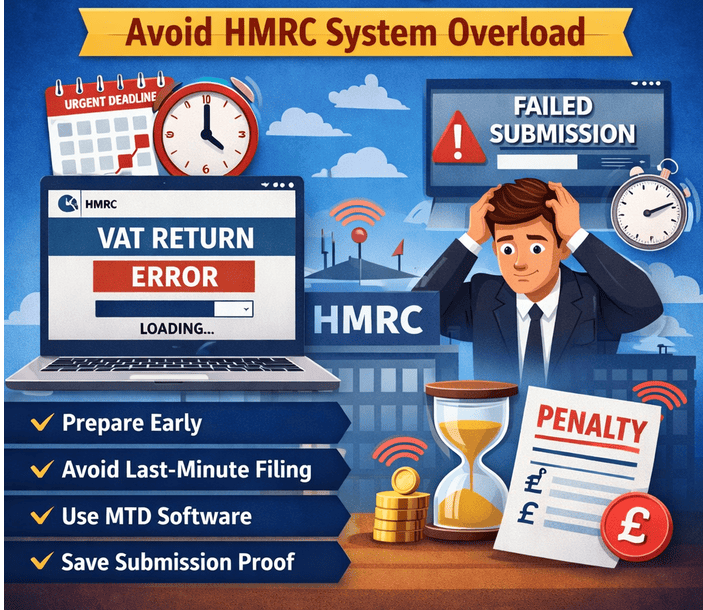
- Late filing penalties apply even when delays are caused by system stoppage. HMRC does not pause deadlines when systems are busy. Businesses remain responsible for a successful submission.
- This guide explains how to file VAT online safely during peak filing periods and how to reduce the risk of failure when HMRC systems are under pressure.
Why HMRC systems slow down near VAT deadlines
HMRC receives a surge in VAT submissions near filing deadlines. Most businesses wait until the final days to submit. As a result, congestion is predictable.
Typical issues during busy periods include
- Session timeouts
- Login delays
- Submission errors
- Unresponsive confirmation screens
These are technical problems. They are not linked to VAT calculations. If a return is not received on time, penalties still apply.
File VAT returns online during busy HMRC periods
- Filing VAT returns online during busy HMRC periods requires preparation. Browser-based filing depends on stable sessions. When traffic increases, sessions often end before submissions are completed.
- MTD compliant VAT software sends data directly to HMRC systems. This reduces the need to reload pages or log in repeatedly. Structured submissions reduce the risk of problems during high traffic.
- When systems are slow, businesses benefit from tools that save VAT data and attempt resubmission without requiring manual re-entry.
Avoid HMRC system overload when filing VAT online
System overload is not random. It follows clear patterns near VAT deadlines. By changing how and when submissions are made, businesses can reduce risk.
To avoid HMRC system overload when filing VAT online
- Prepare VAT figures before deadline week
- Submit during daytime hours
- Avoid last hour filing
- Use MTD compliant direct submission software
These steps reduce reliance on unstable portal sessions.
How to file VAT online near the deadline safely
Some businesses must file close to the deadline due to cash flow timing or final invoice delays. Filing late does not mean filing incorrectly.
To reduce risk when filing VAT online near the deadline
- Save VAT drafts early
- Review figures before submission day
- Submit when system traffic is lower
- Confirm HMRC acceptance immediately
Draft data remains secure on compliant VAT platforms, allowing submissions to continue even if interruptions occur.
File VAT online without failed submissions
Failed submissions create confusion. Some businesses repeatedly retry, which increases errors and causes session locks.
Stable VAT filing avoids this by:
- Validating figures before submission
- Sending data in a single structured request
- Providing clear acceptance or rejection status
- Storing submission proof automatically
Filing VAT online without failed submissions helps prevent penalty points and interest charges.
Why MTD compliant software helps during peak deadlines
- MTD compliance is required for VAT filing. It also improves reliability during periods of high system load.
- VAT return software connects directly to HMRC. This avoids multiple browser actions that slow down during heavy traffic. Submissions are cleaner and complete more quickly.
- Using compliant software during peak deadlines reduces reliance on manual steps that are more likely to fail.
Many businesses file VAT without an accountant. This is permitted under HMRC rules. Challenges usually arise during deadline congestion.
When filing VAT online during deadline traffic without professional support, the process should
- Be simple to follow
- Display figures clearly
- Allow direct submission
- Store confirmation records
Some MTD compliant platforms are designed to support direct VAT filing without the complexity of full accounting software.
Protect proof when filing VAT online late
Disputes can occur during busy deadlines. Businesses may believe they submitted on time, even as HMRC requests evidence.
You should always retain
- Submission receipt ID
- Date and time of acceptance
- Confirmation status
Platforms that store submission confirmations help protect businesses during deadline disputes.
File VAT online fast when HMRC systems are busy
- Prepared VAT data
- Minimal submission steps
- Stable system connection
Businesses most affected by the peak deadline filing
Some businesses face a higher risk during HMRC system overload
- Businesses with high VAT liabilities
- Seasonal businesses
- Multi entity VAT filers
- Non UK sellers
- Businesses with previous late filing points
For these groups, a single failed submission can trigger penalties.
Choosing the right approach for peak deadline VAT filing
Filing VAT online during peak deadlines is not about shortcuts. It is about using stable processes and compliant tools.
The safest approach combines
- Early preparation
- Direct HMRC submission
- Saved draft data
- Clear confirmation records
This reduces dependency on overloaded systems and lowers penalty risk.
Despite being positioned between phones and desktops, tablets often adopt the worst habits from both.Final thoughts
- HMRC system overload during VAT deadlines is predictable. Late penalties are not flexible. Businesses reduce risk by preparing early and using MTD compliant filing methods.
- Filing VAT online during peak deadlines becomes manageable when submission is stable, proof is stored, and delays are avoided.
Disclaimer: Our blogs and articles are written to share general information only. If you’re looking for an easy way to submit your VAT under Making Tax Digital (MTD), SwiftVATPro offers a simple and reliable online solution.

Frequently Asked Questions:
Your Questions – Answered ,We’re here to help you with anything VAT-related.
1. Why does the HMRC VAT online system slow down near filing deadlines?
HMRC’s online services experience heavy traffic near VAT deadlines as thousands of businesses try to submit returns at the same time. This surge puts pressure on HMRC’s servers, leading to slow-loading pages, timeouts, or temporary service unavailability.
While HMRC maintains its systems year-round, peak deadline days—especially evenings and the final submission date—are most vulnerable to overload. Many users wait until the last moment due to missing paperwork, cash flow planning, or simple oversight, which further increases stoppage.
Understanding this pattern helps businesses plan ahead and avoid unnecessary stress, failed submissions, or late-filing penalties resulting from system delays beyond their control.
2. What happens if my VAT return fails to submit due to HMRC system issues?
If your VAT return fails to submit because the HMRC system is unavailable or times out, the responsibility to file on time still remains with the business. HMRC generally expects VAT returns to be submitted before the deadline, even if technical issues arise on the final day.
While penalties may sometimes be reviewed in the event of widespread outages, this is not guaranteed and usually requires evidence. Failed submissions can also create confusion, especially if you’re unsure whether HMRC received partial data.
This is why it’s important to keep screenshots, error messages, and submission attempts as proof. Filing earlier reduces the risk of encountering these issues altogether.
3. How early should I prepare my VAT return to avoid deadline problems?
Ideally, VAT preparation should begin as soon as the VAT period ends, rather than waiting until the submission deadline approaches. Giving yourself at least 7–10 days before the due date allows time to review transactions, correct errors, and handle any unexpected issues such as missing invoices or system downtime.
Early preparation also provides flexibility if HMRC services are slow or unavailable during peak periods. Many businesses find that preparing VAT data in advance reduces mistakes and avoids rushed decisions that can lead to inaccuracies.
Even if payment is made closer to the deadline, having the return ready early significantly lowers stress and technical risk. Treating VAT filing as a scheduled process rather than a last-minute task is one of the most effective ways to stay compliant and avoid penalties.
4. Is it safer to file VAT using MTD-compliant software instead of the HMRC portal?
Using MTD-compliant software can be more reliable than relying solely on the HMRC portal, particularly during busy deadline periods. These platforms connect directly to HMRC systems through approved APIs, which often provide more stable submission handling than browser-based access.
Many MTD tools also allow users to prepare returns in advance, validate data before submission, and automatically store proof of filing. This can be helpful if HMRC services are slow or temporarily unavailable on peak days.
While the HMRC portal works well outside high-traffic periods, businesses filing close to deadlines may benefit from using recognised software to reduce technical dependency on the portal.
5. What are the best ways to reduce stress during VAT filing deadlines?
Reducing VAT deadline stress starts with planning and consistency. Keeping digital records up to date throughout the VAT period makes preparation quicker and more accurate. Setting calendar reminders well ahead of deadlines helps avoid last-minute rushes.
Businesses should also allow buffer time in case of HMRC system delays, payment processing issues, or unexpected data errors. Using reliable MTD-compliant software can help by providing clear submission status and confirmation receipts.
It’s also wise to avoid filing late at night on deadline day, when system traffic is often highest. Finally, understanding that HMRC overloads are common—and predictable—can help businesses adjust their approach.