

Mastering VAT Validation: Your Essential Guide to HMRC Compliance
- No credit card required
Talk to our VAT experts
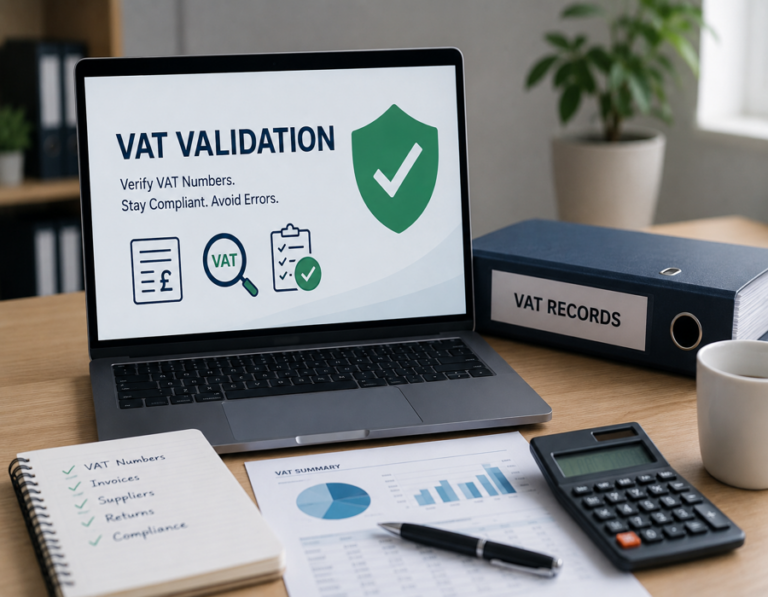
What Is HMRC VAT Validation?
HMRC VAT validation is the process of checking whether a VAT registration number is valid and correctly registered. Businesses often validate VAT numbers before issuing invoices, reclaiming VAT, or submitting VAT returns.
VAT validation is especially important when:
- Working with new suppliers or customers
- Trading internationally
- Reclaiming input VAT
- Preparing VAT submissions
- Managing digital accounting records
- Preventing invoice errors
Businesses can validate UK VAT numbers using HMRC systems or the VIES (VAT Information Exchange System) database for certain international checks. Businesses unfamiliar with the process can also review our guide, “UK VAT Number Check Made Simple,” on GOV.UK and VIES for additional guidance.
Incorrect VAT information can affect VAT calculations, create accounting inconsistencies, and increase the risk of compliance problems during HMRC reviews.
Why VAT Validation Matters for UK Businesses
Many VAT filing errors happen because businesses rely on outdated customer information, manually entered VAT numbers, or incomplete records.
VAT validation helps businesses:
- Reduce incorrect VAT submissions
- Improve invoice accuracy
- Prevent duplicate or invalid VAT numbers
- Maintain cleaner accounting records
- Support MTD compliance
- Reduce manual checking time
- Lower the risk of VAT disputes
Businesses handling large transaction volumes often face a higher risk of data entry errors. Regularly validating VAT numbers can help identify issues before VAT returns are submitted.
Common VAT Filing Errors Businesses Make
Incorrect calculations do not always cause VAT filing errors. In many cases, they start with inaccurate business information.
Common VAT-related mistakes include:
Using Invalid VAT Registration Numbers
Businesses sometimes enter VAT numbers incorrectly or continue using expired registration details. This can affect the legitimacy of invoices and the accuracy of VAT reclaim.
Incorrect Supplier Records
Old supplier records may contain outdated VAT information, particularly when businesses change legal structures or VAT registration status.
Duplicate Customer Entries
Multiple records for the same business can create inconsistencies across invoices and accounting systems.
Manual Data Entry Errors
Typing mistakes during invoice creation or VAT submissions can cause avoidable filing issues.
Cross-Border VAT Confusion
International VAT rules can create additional complexity when validating EU or overseas VAT numbers.
Without proper validation processes, these mistakes may remain unnoticed until HMRC reviews records or identifies inconsistencies. Businesses preparing VAT submissions should also understand what HMRC Checks Before Your UK VAT Return Online.
How VAT Validation Supports HMRC Compliance
HMRC expects businesses to maintain accurate digital records under Making Tax Digital regulations. Businesses transitioning to digital compliance can benefit from understanding how to file VAT Returns under MTD requirements correctly. VAT validation supports compliance by improving the quality and reliability of financial data.
Validating VAT numbers helps businesses:
- Keep cleaner digital VAT records
- Reduce inaccurate VAT claims
- Improve audit readiness
- Support invoice verification procedures
- Strengthen supplier due diligence
- Maintain more reliable accounting systems
Businesses using digital VAT software can often automate parts of the validation process, helping reduce manual workloads and improve efficiency.
Manual VAT Validation vs Automated VAT Validation
Some businesses still validate VAT numbers manually using online government tools. While this may work for occasional checks, manual processes can become time-consuming for businesses managing multiple clients, suppliers, or invoices.
Manual VAT Validation
Manual validation typically involves:
- Entering VAT numbers individually
- Checking records manually
- Updating spreadsheets
- Verifying invoices separately
This approach may increase:
- Administrative time
- Human error risks
- Duplicate records
- Delayed processing
Automated VAT Validation
Automated VAT validation uses software systems to verify VAT numbers during invoicing or filing workflows.
Benefits may include:
- Faster verification
- Reduced manual input
- Better record consistency
- Improved workflow efficiency
- More reliable digital recordkeeping
- Simplified compliance management
For growing businesses and accountants managing multiple clients, automation can significantly reduce repetitive administrative tasks. This is one reason why Digital VAT Returns in the UK: Why Automation Is Becoming Essential for UK businesses.
VAT Validation and Fraud Prevention
VAT fraud remains a concern for many businesses, particularly those handling online transactions, imports, exports, or new supplier relationships.
Validating VAT numbers helps businesses identify suspicious or inaccurate registration details before processing invoices or payments.
Businesses should be cautious when:
- VAT numbers appear incomplete
- Supplier information changes unexpectedly
- Invoice details do not match business records
- Businesses cannot provide valid VAT registration details
- International transactions contain inconsistent Tax information
Maintaining proper validation procedures can strengthen financial controls and reduce exposure to compliance risks. Businesses concerned about late filings or compliance issues should also review Avoid VAT Penalties by Filing on Time.
VAT Validation for Accountants and Multi-Client Firms
Accountants and bookkeeping firms often manage VAT submissions for multiple businesses. Inconsistent supplier data or incorrect VAT records across clients can create unnecessary delays and increase administrative complexity.
VAT validation helps firms:
- Standardise VAT record checks
- Improve submission accuracy
- Reduce client filing errors
- Streamline digital workflows
- Improve internal compliance procedures
- Handle larger client volumes more efficiently
As MTD requirements continue evolving, many firms are adopting digital processes to improve consistency and reduce manual intervention.
How VAT Software Simplifies Validation and Compliance
Modern VAT submission software can help businesses manage digital VAT filing requirements more efficiently while supporting accurate record management.
Businesses using HMRC-compatible VAT submission software may benefit from:
- Secure online VAT submissions
- Faster VAT return processing
- Improved submission accuracy
- Simplified digital filing workflows
- Reduced manual administration
- Better visibility across VAT obligations
Using reliable VAT software also helps businesses maintain better visibility across invoices, supplier records, VAT liabilities, and filing deadlines.
Businesses using HMRC-recognised VAT submission software, such as Swift VAT Pro, can simplify online VAT filing while reducing the risk of common submission errors. Businesses comparing different solutions should also understand how to choose the Right HMRC VAT Submission Software for their operational needs.
Best Practices for Accurate VAT Validation
Businesses can improve VAT compliance by implementing consistent validation procedures across their accounting processes.
Verify VAT Numbers Before Invoicing
Checking VAT numbers before issuing invoices can help reduce future corrections.
Maintain Updated Supplier Records
Regularly reviewing supplier information helps avoid outdated VAT details.
Use Digital Recordkeeping Systems
Digital systems reduce reliance on spreadsheets and manual data entry.
Review VAT Data Before Submission
Checking records before filing VAT returns can help identify inconsistencies early.
Automate Repetitive Processes Where Possible
Automation can improve accuracy and reduce administrative workload.
The Growing Importance of VAT Validation in Digital Tax Compliance
As businesses continue to adopt digital accounting systems, VAT validation is becoming increasingly important for maintaining accurate financial records and reducing compliance risks.
Businesses that rely heavily on manual processes may face increasing challenges in efficiently managing large volumes of invoices, supplier records, and VAT submissions.
Implementing reliable VAT validation procedures can help businesses:
- Improve filing accuracy
- Reduce avoidable VAT errors
- Strengthen digital compliance processes
- Support smoother HMRC submissions
- Improve operational efficiency
For businesses preparing for long-term digital Tax compliance, accurate VAT validation is becoming increasingly important for maintaining reliable financial operations.
Conclusion
HMRC VAT validation helps businesses maintain accurate records, reduce VAT filing errors, and improve overall compliance with digital Tax requirements.
Whether managing a small business, growing an e-commerce operation, or a multi-client accounting practice, validating VAT information before submission can help prevent costly mistakes and reduce administrative pressure.
Businesses using digital VAT submission software can improve filing efficiency, maintain better digital records, and reduce avoidable submission mistakes. Using Trusted Digital VAT Return Software can also help businesses improve submission accuracy and reduce reporting errors.
Disclaimer: Our blogs and articles are written to share general information only. If you’re looking for an easy way to submit your VAT under Making Tax Digital (MTD), SwiftVATPro offers a simple and reliable online solution.
Frequently Asked Questions:
Your Questions – Answered ,We’re here to help you with anything VAT-related.
1. What happens if a business uses an invalid VAT number?
Using an invalid VAT number can create several problems for a business, especially when preparing VAT returns or reclaiming VAT on purchases. HMRC may question the legitimacy of invoices, request additional documentation, or reject VAT reclaims if supplier details are incorrect. In some situations, businesses may also face delays during compliance reviews or audits.
Invalid VAT numbers often occur due to simple data-entry errors, outdated supplier records, or changes to a company’s VAT registration status. Businesses working with multiple suppliers or handling high transaction volumes are usually more exposed to these issues.
Regular VAT validation helps reduce these risks by ensuring VAT numbers are accurate before invoices are processed or submitted to HMRC. It also supports better recordkeeping and improves confidence in financial data.
2. Why is VAT validation important before submitting VAT returns?
VAT validation plays an important role in improving the accuracy of VAT returns before they are submitted to HMRC. Incorrect VAT numbers, outdated supplier information, or duplicate records can lead to filing mistakes that may affect VAT calculations and reporting accuracy.
By validating VAT details in advance, businesses can identify issues earlier and reduce the chances of submitting inaccurate information. This is especially important for businesses managing many invoices, suppliers, or international transactions, where errors are easier to overlook.
Accurate VAT validation also supports better compliance with the Making Tax Digital requirements, as businesses are expected to maintain reliable digital records. When VAT information is verified regularly, accounting records become more organised and easier to review.
3. Can small businesses benefit from VAT validation processes?
Yes, small businesses can benefit significantly from VAT validation, even if they process fewer invoices than larger organisations. Many smaller businesses still rely on spreadsheets or manual data entry, which can increase the likelihood of simple mistakes such as incorrect VAT numbers or duplicate supplier records.
Small errors can sometimes create bigger compliance issues later, particularly when preparing VAT returns or reclaiming VAT. Validating VAT information regularly helps improve record accuracy and reduces the chance of avoidable filing mistakes.
VAT validation can also save time by helping businesses identify errors before submitting to HMRC. This becomes especially useful for businesses that are growing, working with new suppliers, or starting to trade internationally.
4. How does automated VAT validation differ from manual validation?
Manual VAT validation usually involves checking VAT numbers individually using government databases or online verification tools. While this approach may work for occasional checks, it can become time-consuming and difficult to manage when businesses handle larger numbers of invoices or suppliers.
Automated VAT validation uses software systems to verify VAT information during invoicing or VAT filing workflows. Instead of manually reviewing every record, businesses can automate parts of the process, reduce repetitive tasks and improve consistency.
One of the biggest advantages of automation is reduced human error. Manual data entry errors can easily occur when teams process large volumes of financial information. Automated systems help identify potential issues earlier and improve the accuracy of digital records.
5. Does HMRC require businesses to validate VAT numbers?
HMRC expects businesses to maintain accurate VAT records and submit correct information as part of their VAT compliance responsibilities. While HMRC does not always explicitly require businesses to manually validate every VAT number, they are responsible for ensuring that VAT information used on invoices and in VAT returns is accurate.
Validating VAT numbers is considered good business practice because it helps reduce filing errors, supports reliable VAT reclaims, and improves record accuracy. Businesses that regularly work with new suppliers or overseas customers, or engage in cross-border transactions, often benefit most from consistent validation procedures.
Incorrect VAT information can create complications during HMRC reviews or audits, particularly if businesses cannot demonstrate that reasonable checks were carried out. This is why many businesses include VAT validation as part of their broader compliance and recordkeeping processes.