

VAT compliance software UK: Avoid costly VAT deadline mistakes
For many UK businesses, VAT filing starts as a routine admin task. Then suddenly, a deadline gets missed, an error slips through, or HMRC flags a compliance issue – and what should have taken minutes turns into hours of stress, penalties, and lost productivity.
- No credit card required
Talk to our VAT experts
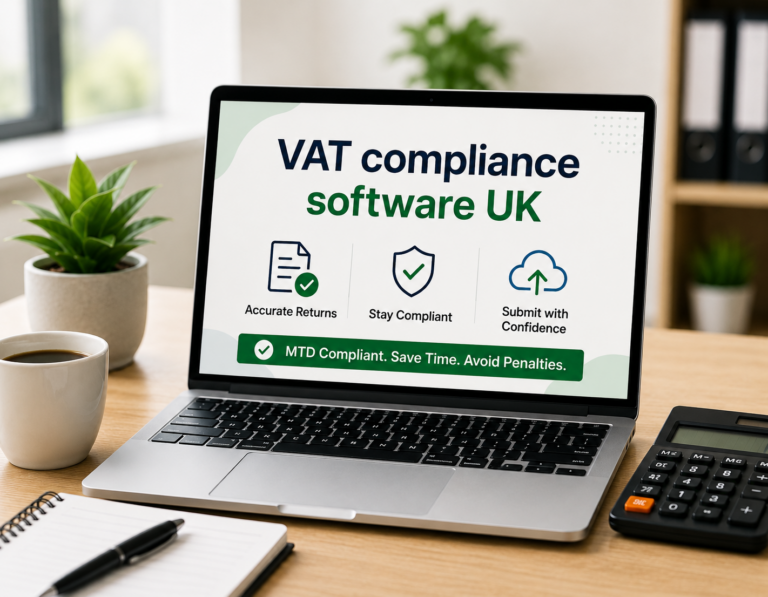
If you’re still relying on spreadsheets, manual calculations, or outdated filing methods, you’re not alone. But the cost of “good enough” VAT processes is rising fast.
With HMRC’s Making Tax Digital (MTD) rules now fully embedded into UK Tax compliance, businesses are under increasing pressure to submit accurate VAT returns on time using compatible software.
The good news? VAT compliance doesn’t have to be complicated.
That’s where Swift VAT Pro is helping UK sole traders, small businesses, and accountants simplify VAT returns while staying fully compliant with HMRC requirements.
Why VAT compliance is becoming more difficult for UK businesses
For small businesses and growing accountancy practices, VAT filing is no longer just about entering figures and submitting a form.
Today’s businesses must manage:
- Making Tax Digital compliance
- Secure digital record keeping
- Accurate VAT calculations
- Multiple client submissions
- Tight VAT deadlines
- HMRC-recognised software requirements
And the reality is that many businesses are still juggling disconnected systems, spreadsheets, and manual processes that increase the risk of costly mistakes.
According to HMRC guidance, all VAT-registered businesses are now required to use compatible software for digital VAT submissions.
The challenge is not simply “filing VAT returns.” It’s filing them accurately, securely, and on time — every single quarter.
The real problems businesses face with VAT returns
1. Manual Errors That Lead to HMRC Problems
One incorrect figure in a spreadsheet can trigger compliance issues, submission rejections, or unexpected VAT liabilities.
Many businesses still manually copy and paste VAT figures between systems, increasing the risk of human error.
This becomes even more risky for accountants managing multiple clients under strict deadlines.
2. Missing VAT Deadlines
Late VAT submissions can result in penalties, interest charges, and unnecessary pressure on finance teams.
For busy business owners, VAT deadlines often compete with payroll, invoicing, supplier payments, and day-to-day operations.
Without a streamlined system, deadlines become harder to manage as the business grows.
3. Overly Complex Accounting Software
Many businesses don’t actually need a large, expensive accounting platform to submit VAT returns online.
They need a fast, compliant, and straightforward way to file VAT returns directly to HMRC.
That’s why more UK businesses are looking for dedicated VAT filing software rather than bloated accounting systems packed with features they never use.
How Swift VAT Pro simplifies VAT filing
Swift VAT Pro is designed specifically to make MTD VAT filing simple for UK businesses, sole traders, accountants, and VAT agents.
Instead of forcing businesses to change their existing accounting workflow, Swift VAT Pro works alongside the tools they already use.</p
That means you can:
- Export VAT data from your current accounting system or spreadsheet
- Upload it securely
- Review your figures clearly
- Submit directly to HMRC in minutes
No complicated onboarding. No expensive migrations. No unnecessary software clutter,
According to Swift VAT Pro, the platform is fully HMRC-recognised and built specifically for Making Tax Digital VAT submissions.
A better solution for accountants and VAT agents
For accountants and finance professionals, VAT season often means chasing clients, reviewing spreadsheets, and manually tracking submissions across multiple companies.
This is where efficient VAT management becomes a competitive advantage.
Swift VAT Pro includes features built specifically for accountants and growing practices, including:
- Multi-company dashboards
- Centralised VAT tracking
- VAT history and liability views
- Multiple user access
- Secure HMRC API submissions
Instead of managing fragmented workflows, accountants can oversee all client VAT activity from one place.
For firms scaling their client base, this can significantly reduce admin time while improving accuracy and visibility.
Example: The difference a digital VAT workflow makes
Imagine this common scenario:
A growing UK business manages VAT using spreadsheets and email reminders. The finance manager manually checks figures every quarter and uploads returns close to the deadline.
One quarter, an incorrect formula creates a reporting error. The business only discovers the issue after submission, resulting in extra reconciliation work and wasted hours resolving the problem.
Now compare that with a streamlined digital workflow:
- VAT data is uploaded securely
- Figures are reviewed before submission
- VAT history is stored centrally
- Returns are submitted directly to HMRC
- Liability tracking is visible in real time
The difference is not just convenience.
It’s reduced stress, lower compliance risk, and more time to focus on running the business.
Why more businesses are moving away from spreadsheet-only VAT filing
Spreadsheets still play a role in accounting for UK businesses. But relying on them alone for VAT compliance is becoming increasingly risky.
Modern VAT compliance software helps businesses:
- Reduce manual errors
- Improve submission accuracy
- Maintain digital compliance records
- Track liabilities more efficiently
- Avoid missed VAT deadlines
- Simplify MTD compliance
And importantly, businesses no longer need to invest in enterprise-level accounting systems to stay compliant.
Swift VAT Pro positions itself as a practical solution for businesses that want compliant VAT returns without unnecessary complexity.
The cost of waiting
Many businesses only upgrade their VAT process after they experience a problem:
- A missed deadline
- A rejected submission
- An HMRC compliance issue
- Lost hours fixing spreadsheet errors
- Pressure during quarterly filing periods
By then, the damage has already been done.
The businesses that stay ahead are the ones that simplify compliance before problems appear.
As VAT regulations continue evolving, having reliable MTD VAT software is quickly becoming essential — not optional.
Start filing VAT returns the smarter way
If your business is still struggling with manual VAT processes, disconnected spreadsheets, or stressful filing deadlines, now is the time to simplify your workflow.
Swift VAT Pro helps UK businesses and accountants submit VAT returns online quickly, securely, and in full compliance with HMRC Making Tax Digital requirements.
Whether you manage one VAT registration or hundreds of clients, Swift VAT Pro gives you a faster, simpler way to stay compliant and in control.
Ready to reduce VAT stress and file with confidence?
Start your free 30-day trial today and discover how easy compliant VAT filing can be.
Disclaimer: Our blogs and articles are written to share general information only. If you’re looking for an easy way to submit your VAT under Making Tax Digital (MTD), SwiftVATPro offers a simple and reliable online solution.
Frequently Asked Questions:
Your Questions – Answered ,We’re here to help you with anything VAT-related.
1. What happens if a business misses a VAT deadline in the UK?
Missing a VAT deadline can create more problems than many business owners expect. HMRC may issue penalty points, charge interest on unpaid VAT, or apply financial penalties depending on how often deadlines are missed.
Beyond the financial impact, late submissions can also create unnecessary stress for finance teams and business owners who are already managing multiple responsibilities. In many cases, missed deadlines happen because businesses rely on manual reminders, spreadsheets, or disconnected accounting processes.
As businesses grow, keeping track of VAT obligations becomes harder without the right systems in place. Using dedicated VAT compliance software can help automate parts of the process, reduce manual work, and make it easier to submit VAT returns accurately and on time.
2. Do all UK businesses need MTD compliant software?
Most VAT-registered businesses in the UK are now required to follow HMRC’s Making Tax Digital rules. This means businesses must maintain digital records and submit VAT returns using compatible software rather than manual paper-based systems.
For many business owners, the biggest challenge is finding software that is easy to use without completely changing their existing workflow. Some businesses still rely heavily on spreadsheets or older accounting methods, which can make compliance more difficult over time.
Choosing software designed specifically for VAT filing can also reduce the risk of manual errors and improve visibility over VAT liabilities. For growing businesses and accountants managing multiple clients, this can save considerable time while helping maintain full HMRC compliance.
3. Can VAT compliance software work alongside existing accounting systems?
Yes, many modern VAT compliance solutions are designed to work alongside existing accounting systems rather than replace them entirely. This is important for businesses that already have established accounting processes but need a simpler and more compliant way to manage VAT submissions.
Instead of forcing businesses to migrate all financial operations to a new platform, VAT software often allows users to export financial data from spreadsheets or accounting tools and upload it securely for submission to HMRC.
For accountants and finance managers, integration flexibility is especially valuable because different clients may use different bookkeeping systems. Having a single platform for VAT filing can simplify client management, improve accuracy, and reduce administrative workload.
4. Why are spreadsheets becoming risky for VAT filing?
Spreadsheets are still widely used by UK businesses, but relying on them alone for VAT filing can create significant risks. Manual data entry, formula mistakes, and version control issues can all lead to inaccurate VAT calculations or missed deadlines.
As HMRC’s digital compliance requirements continue evolving, businesses are expected to maintain more accurate digital records and submit VAT returns using recognised software. While spreadsheets can still support financial reporting, they are often not enough on their own for efficient VAT compliance management.
Using dedicated VAT filing software helps reduce the likelihood of human error while making the submission process faster and more organised. Businesses can also benefit from features such as VAT history tracking, secure data storage, and direct HMRC submissions, all of which help improve overall compliance.
5. How can VAT software help accountants manage multiple clients more efficiently?
For accountants and VAT agents, managing multiple client submissions manually can quickly become time-consuming and difficult to scale. Chasing information, reviewing spreadsheets, and monitoring deadlines across different businesses often creates pressure during VAT filing periods.
VAT compliance software helps simplify this process by centralising client VAT data. Accountants can monitor submissions, review liabilities, track filing history, and submit returns directly to HMRC through a single platform.
As accountancy practices grow, having a streamlined VAT workflow becomes increasingly important. Reducing repetitive admin tasks allows accountants to focus more on client support and advisory services rather than spending hours on manual filing each quarter.