

HMRC MTD VAT software for sole traders: Do you really need one?
If you are VAT registered as a sole trader, you must file digitally. Making Tax Digital applies to most VAT-registered businesses in the UK, including individuals trading on their own. Many sole traders still keep records in spreadsheets. That is allowed. What is not allowed is submitting VAT returns through outdated manual portals if you fall under MTD rules.
- No credit card required
Talk to our VAT experts
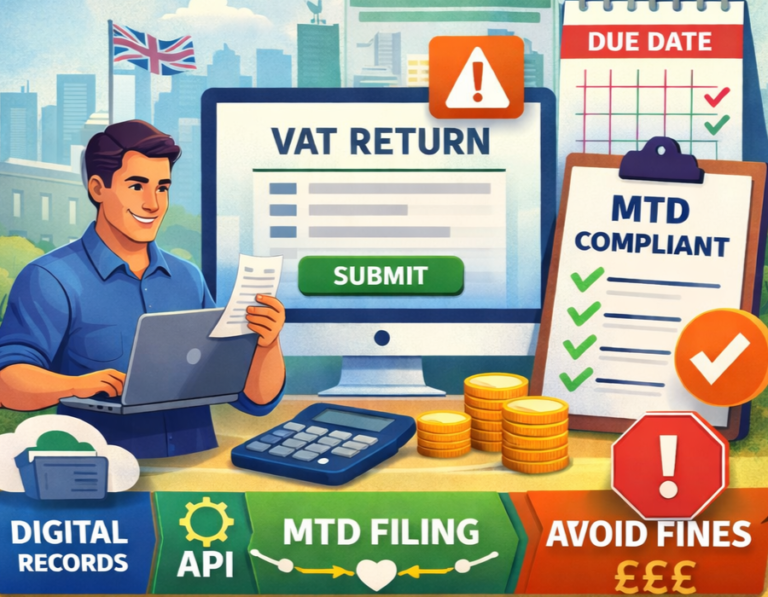
This guide explains whether you need HMRC MTD VAT software as a sole trader, what qualifies as compliant, and how to make the right decision.
HMRC MTD VAT software for sole traders explained
Making Tax Digital for VAT requires businesses to
- Keep digital VAT records
- Submit returns using compatible software
- Maintain digital links between records
If your business turnover goes above the current VAT registration limit, you must follow the Making Tax Digital rules for VAT. If you voluntarily registered for VAT, you are usually still required to comply with the digital filing rules.
For most sole traders, this means using MTD compatible VAT software that connects directly to HMRC via an approved digital link.
The key requirement is that your VAT return must be submitted through software that communicates with HMRC through an API. Manual copy-and-paste is not compliant.
Businesses comparing different filing methods can also explore the differences between HMRC MTD VAT software and basic online VAT submission tools.
Do sole traders legally need MTD compatible VAT software?
- Business structure does not change the obligation. Sole traders, partnerships, and limited companies are treated the same for VAT digital submission.
- There are limited exemptions, such as digital exclusion due to disability or location. These require formal approval and are uncommon.
- If you are VAT registered and not officially exempt, you need HMRC MTD VAT software for sole traders.
MTD compliant VAT software for sole traders using spreadsheets
You can continue using spreadsheets for bookkeeping. The issue is how the final VAT return is submitted.
To follow MTD rules, you need software that lets you send your spreadsheet records straight to HMRC.
Most of the rules are about keeping things going online. You cannot type numbers into another system by hand before you send them.
This is how a compliant process looks:
- VAT data is stored digitally
- Totals are connected to the submission software through a digital link
- The VAT return is sent directly to HMRC through an API
This setup lets you keep your records in line with MTD rules while still giving you flexibility.
Why HMRC recognised VAT software matters for sole traders?
The main benefit is compliance. There are practical advantages too.
- Accuracy: Software reduces calculation mistakes by validating totals before submission
- Efficiency: Once authorised with HMRC, future returns can be submitted quickly
- Audit readiness: Digital records make it easier to respond to HMRC checks or queries
- Reduced risk: Following MTD rules lowers the chance of technical penalties
For sole traders managing VAT alone, clarity in the filing process is important.
Risks of filing without proper HMRC MTD VAT software for sole traders
Trying to bypass compliant software can create problems.
Common issues include:
- Using non approved tools
- Breaking digital link requirements
- Submitting incorrect totals
- Missing deadlines due to setup confusion
HMRC uses a points-based penalty system for late submissions. Repeated issues can increase financial impact.
Using proper MTD compliant VAT software for sole traders removes the technical risk associated with the submission method.
How to choose the right VAT submission software for sole traders
You do not need complex accounting systems if your only goal is compliant VAT filing.
Focus on
- Simplicity: The interface should be easy to use without advanced accounting knowledge
- Direct HMRC integration: The software must connect securely through the MTD API
- Spreadsheet compatibility: Ensure Excel can upload or connect to CSV files
- Clear pricing: Find plans with clear pricing that work for small businesses
- Support access: Basic help during setup or filing can prevent delays
Sole traders should use the correct HMRC MTD VAT software to stay compliant without installing unnecessary functionality.
When HMRC MTD VAT software becomes essential for sole traders
If you find yourself in any of these situations, you must use compliant software
- Just registered for VAT
- Sales above the VAT limit
- Filing quarterly returns under MTD
- Previous filing warnings from HMRC
Setting up your software ahead of time helps you avoid stress at the last minute. Get authorisation from HMRC well before your filing deadline.
Can sole traders file VAT without an accountant?
- Yes. MTD rules require compliant software, not professional representation. You can file on your own if you understand your VAT scheme and keep accurate records.
- Many sole traders prefer this approach because it helps control costs. Using HMRC recognised MTD VAT software for sole traders that complies with digital filing rules is the key requirement.
A practical option for compliant filing
- There are several HMRC-compatible tools available for sole traders. Some offer full accounting features. Others focus only on VAT submission.
- The most important factor is not the brand. It is whether the software meets HMRC MTD requirements and fits your workflow.
Final takeaway
- If you are VAT registered, you almost certainly need HMRC MTD VAT software for sole traders. Manual portal submission is no longer standard practice under MTD.
- You do not need complicated systems. You need a compliant digital submission that maintains proper digital records.
Frequently Asked Questions:
Your Questions – Answered ,We’re here to help you with anything VAT-related.
1. Do all VAT-registered sole traders need HMRC MTD VAT software?
Yes, almost always. If you are a sole trader in the UK and are registered for VAT, you must follow the Making Tax Digital rules for VAT. This means you have to keep digital records and file your VAT return using HMRC-compliant software.
It doesn’t matter if you run a small business or work for yourself. The digital requirement stays the same no matter how your business is set up. There are only a few exceptions, such as when someone can’t use the internet because of age, disability, or limited access.
These must be formally approved. Once you are VAT registered, using HMRC MTD VAT software is part of staying compliant and avoiding technical penalties for most sole traders.
2. Can I still use Excel instead of HMRC MTD VAT software for sole traders?
You can still use Excel to keep track of your sales and purchases. Spreadsheets are not against MTD rules. How you file your VAT return is the most important thing. You can’t manually copy totals from Excel into HMRC’s system.
To stay compliant, you need to use MTD-compatible software that connects to your spreadsheet and sends the return through HMRC’s API. People often call this “bridging” or “submission” software.
The connection has to be digital, not handwritten. A lot of sole traders like this setup because it lets them keep their current way of tracking their finances while still meeting HMRC’s digital submission rules.
3. What happens if I file VAT without proper MTD compliant software?
Submitting VAT returns without recognised MTD software could mean you aren’t following the rules. HMRC wants you to keep records and send them in digitally, using systems that work together.
If you break the rules for digital links or use old methods, you could get in trouble, especially if you make mistakes or file late. The UK now has a points-based system for penalising VAT. If you keep making mistakes, your chances of being fined increase.
If you use the wrong submission method, you could still have problems, even if your VAT numbers are correct. Sole traders should use HMRC MTD VAT software that is well-known to avoid technical problems and make filing less stressful.
4. Is HMRC MTD VAT software expensive for sole traders?
Not always. Many sole traders think they need to buy a full accounting package, which can be expensive. If you already keep your books separate, you might only need a specialised VAT submission tool.
You can often get basic HMRC MTD VAT software for sole traders for a low monthly or yearly fee. Compared to possible fines, missed deadlines, or the cost of hiring an accountant to file, software is usually more affordable.
The most important thing is to pick a solution that meets your needs without adding extra features.
5. Can a sole trader submit VAT without an accountant under MTD rules?
Yes, you can file your own VAT return if you use MTD software that meets the rules. Sole traders don’t have to hire an accountant, according to HMRC. Digital compliance is the only requirement, not professional representation.
You can do your own submissions if your records are correct and you know how your VAT scheme works. Many sole traders like this method because it helps them keep costs down.
The most important things are to set up your HMRC MTD VAT software correctly, get it recognised by HMRC, and make sure your digital records are complete before you send them in. With the right setup, filing can be simple every three months.